

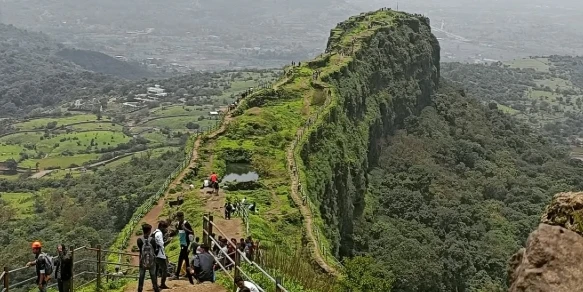
Lohagad Fort, more popularly referred to as the "Iron Fort" in Marathi, is a long-standing and old strategic fort with a few centuries of existence. It is located at about 3,400 feet in the range of Western Ghats near Lonavala and has been one of the prominent military points for many of the ruling governments of India. Initially constructed during the Satavahana era, Lohagad was subsequently occupied and held by other dynasties such as the Chalukyas, Rashtrakutas, Yadavas, Bahamanis, and Nizamshahi kingdoms. But the brightest page in its history was written during the Maratha era under Chhatrapati Shivaji Maharaj in the 17th century. Shivaji took over Lohagad in 1648 but was forced to surrender it to the Mughals in 1665 according to the Treaty of Purandar. He took it over again in 1670, though, and used it as a treasury depot and as a headquarters from which he operated in the area. Its stability and elevation were most suitable for treasure depots and to watch the enemy soldiers pass by. Maharashtra’s historic hill forts and trekking trails are featured throughout our Treks in Maharashtra guide.The most salient aspect of Lohagad is surely the Vinchu Kata, that is, the long and guarded part of the fort in the form of a scorpion's tail. It was a defence wall that gave tremendous visibility and aided in making the fort unconquerable. Lohagad was rarely utilised in the British years for administrative and military purposes, but was scaled down as a strategic military site when modern warfare became prevalent. The fort is now an Archaeological Survey of India monument and a trekking tourist attraction. Lohagad Fort is not only a part of architectural wonder but also of the strong state of Maharashtra and the wealthy Maratha history. Its blend of nature, architecture, and history still fascinates history lovers as well as tourists. Trekkers interested in heritage routes frequently enjoy our Visapur Fort Trek Package, located near Lohagad.Tourist Places Around Lohagad FortBhaja Caves: Just a few kilometres from Lohagad are the ancient 2nd-century BCE Bhaja Caves, which early Buddhists converted into Buddhist rock-cut caves. They have their beautiful chaitya (prayer hall) with beautiful sculptures and stupas of enormous reputation. Bhaja Caves, amidst rain-fed forests and waterfalls, offer centuries of peace and a visit to travellers in search of vintage Indian paintings and architecture.Visapur Fort: Close to Lohagad, Visapur Fort is a tougher and longer trek. It was constructed during the Maratha Empire period and provides a distant view of Lohagad and the valleys. The fort possesses ruins of old houses, cisterns, and rock inscriptions. For adventure lovers and those who yearn for something more, trekking both Visapur and Lohagad within a single day is ideal.Pawana Lake: Pawna Lake is a scenic man-made lake 20 km from Lohagad Fort. It is a favorite picnic and camp site with its peaceful waters, gentle breeze, and sun-baked vistas of the nearby forts such as Tikona and Tung. For some water activities or even just lounging around, Pawna Lake is an appropriate venue to relax after a trek.Karla Caves: About 10 km from Lohagad are the Karla Caves, another group of ancient Buddhist caves with a dominant chaityagriha (prayer hall) and beautiful carvings. These are well over 2,000 years old and are a good example of early Buddhist community craftsmanship and religious importance here.Lonavala and Khandala: These twin hill stations, 15 km from Lohagad, are famous for their landscapes, waterfalls, and look-out points such as Tiger's Leap and Duke's Nose. They are sight-seeing-and-relaxation spots and very good places to visit either prior to or post the trek.Best Time to Visit Lohagad Fort TrekMonsoon Season (June to September): Monsoon is one of the best times to visit Lohagad Fort, particularly for nature enthusiasts. The whole area is blanketed with greens and waterfalls cascading down, and hidden paths, and hence the scenery is magical and calm. The walk, rock-studded pathways, and dense greens become even more beautiful with rain. Proper care has to be taken while trekking, as the route is muddy, and hence proper footwear and a raincoat have to be used. The cold weather and misty chill also serve as a welcoming relief from heat, and therefore are the ideal season for trekkers who would enjoy a more energetic but rewarding walk.Winter Season (November to February): Winter will be the favourite season to go to Lohagad Fort since the climatic conditions are warm and cold, perfect for a trek. Daytime is perfect with 10°C to 20°C temperature, good for outdoor adventure sports such as trekking and sightseeing and a very good visit to the fort. It's clear, sunny, with a good view of sightseeing a nd views from the top of the fort. It's the great season, peak season for trekking tourists, so the trail and fort will be busy, but overall nice experience. Winter would be the best season for tourists who like less crowded, more convenient trips to the fort.Summer Season (March to May): Although in the region, summer heat is extremely hot, early morning or late afternoon hikes still turn out to be a good time to visit Lohagad Fort. Day and nighttime temperatures rise to 35°C, though in the morning and evening hours, there is a bit of coolness that feels good. The trekkers who would be travelling there during summer need to leave early in the morning so that they can avoid the hot sun and provide themselves with ample water to drink during the trek. The advantage of going there in summer is that it's off-season, thus fewer crowds, and a calm, quiet, isolated experience within the fort. The place would appear dry, but the views are decent.How to Reach Lohagad FortBy Car: It's 100 km away from Mumbai and 65 km away from Pune if you go alone. Western Ghats give way to scenic views in between, and the path would take 2.5 to 3 hours. Come down from the Mumbai-Pune Expressway to Mumbai and arrive at Lonavala, and, being there, drive towards Malavli village, which is the base for the trek. The Malavli gate of the fort is about 3 kilometres away. The road is well signposted and nice to drive on, so it is one of the simplest routes.By Train: Malavli Railway Station is closest railway station to Lohagad Fort, located 5 kilometers from the foot of the fort. It is properly connected with Pune and Mumbai by regular trains. Auto-rickshaw or local taxi from the railway station till the base village can be availed from where you will begin your trek. Or, by train travel till Lonavala Railway Station and go on in the local taxi or by bus till the base.By Bus: If you are travelling by bus, travel by a bus from Mumbai or Pune to Lonavala, which is nicely connected by state and private transportation. Local bus or taxi from Lonavala to Malavli village, and the trek starts from there. Some buses travel directly from Mumbai and Pune to Malavli, particularly during peak tourist seasons.